The Basics of Infant Dental Care

When parents invest in infant dental care, they can help lay the foundation for their young children to have a lifetime of healthy oral habits and a bright smile. Establishing good dental practices can begin even before the first tooth emerges, typically around six months of age. Early dental care can prevent future complications and promote your infant's overall well-being.
The importance of infant dental care
Good oral health is important for overall health, even in babies. Establishing healthy dental habits early helps prevent tooth decay, gum disease, and other oral health issues. Taking care of infants' teeth also supports proper speech development and healthy eating and builds their self-esteem as they age.
When to start dental care
Dental care should begin during infancy, well before the first tooth appears. Pediatric dentists recommend cleaning a baby's gums with a soft, damp cloth after feeding. This practice helps remove bacteria and familiarizes the infant with oral care routines when a trusted adult cleans their mouth.
The infant's first tooth will typically erupt around six months of age. At this stage, parents can use a soft-bristled, age-appropriate toothbrush and a rice-sized amount of fluoride toothpaste to clean the teeth. A small amount of fluoride toothpaste can help prevent tooth decay. Parents should also check the infant's gums and teeth about once a month by lifting their lips to look for decay and inflammation on the outside and inside surfaces of their teeth.
When infants are teething, their gums can be sore, which can cause them to be more fussy. Parents can rub their gums with a clean finger or a damp washcloth to try to ease the discomfort. They can also give the infant a firm rubber teething ring or a cool spoon.
First dental visit
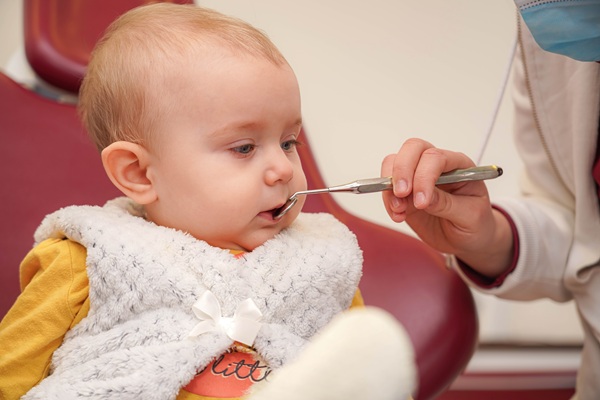
The American Academy of Pediatric Dentistry recommends scheduling a child's first dental visit by their first birthday or within six months after their first tooth appears. This early visit allows the pediatric dentist to evaluate the child's oral development, which helps reduce the risk of tooth decay.
These appointments also allow parents to learn effective home care techniques. Regular check-ups every six months are important for monitoring dental growth and identifying potential issues early on, such as malocclusions (misalignments). Infant dental care visits help babies subconsciously establish a positive relationship with the pediatric dentist, which can ease fear and anxiety about future visits.
Preventing early childhood tooth decay
Early childhood tooth decay, or nursing caries, can begin as soon as the first tooth appears. This condition is typically caused by prolonged exposure to sugary liquids such as bottled formula, milk, or juice, especially at bedtime. To prevent tooth decay, parents should do the following:
- Avoid putting the baby to bed with a bottle
- Limit sugary snacks and drinks
- Wean the child from the bottle in a timely manner
- Begin brushing as soon as the first tooth erupts
- Take the child to the dentist by the time they are a year old
These practices are essential to infant dental care and significantly reduce the risk of cavities.
Take care of your baby's future smile
Infant dental care is a vital component of your child's health. By beginning oral hygiene routines early in your baby's infancy, you establish a strong foundation for lifelong oral health. Call our Holland office to learn more about our infant dental services or to schedule an appointment.
Request an appointment here: https://www.smiling-kids.com or call Myriam Cerezo, DMD, Pediatric Dentist at (215) 867-8243 for an appointment in our Holland office
Check out what others are saying about our services on Yelp: Read our Yelp reviews.
Related Posts
Infant dental care is important for your baby's oral health and development. When the first teeth come in, good oral hygiene from the start helps them eat well, talk clearly, and feel confident. By starting early with your child's dental care, you set up healthy habits that last a lifetime.Even though baby teeth are temporary,…
Bruxism treatment helps protect growing smiles by reducing grinding or clenching during sleep or times of stress. Left unaddressed, teeth grinding can wear down enamel, strain jaw joints, and cause headaches or facial discomfort. Many parents notice unusual sounds at night or see flattened or chipped teeth in the morning. Understanding options for bruxism treatment…
Trying to teach your kids about oral hygiene can be tricky, but with a little help from your local children's dentist, you can make the process much easier and have them wanting to keep their teeth healthy on their own. It all starts with knowing how to teach them about oral hygiene and how to…
A baby root canal may sound scary, however, it is nothing to be afraid of. Modern-day dentistry has allowed for the evolution of gentler techniques and safer approaches, thus reducing the risk of complications and pain during the procedure.Baby root canals, in particular, are done differently as they are performed in a pediatric dentistry setting,…